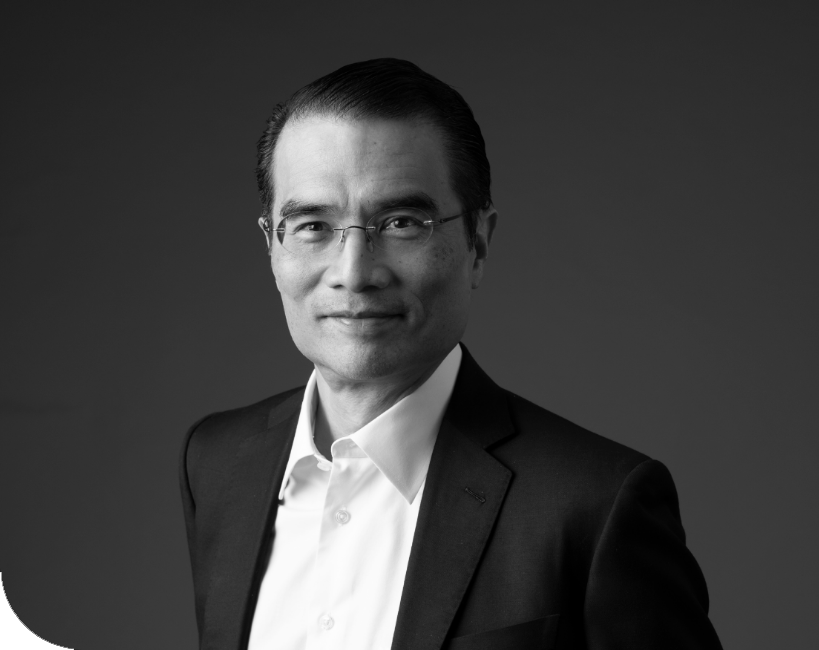
What is overwhelming us today in this pandemic is but a sneak preview of the geologic-scale changes that will result from an unabated climate crisis.”
Federico R. Lopez , Chairman and CEO

A warm heartfelt greeting to all of you! The COVID-19 pandemic drastically changed how we all live and required many of us to work from home and restrict our movements for a prolonged period. Our first priority was to ensure the safety of our employees and their families. Given the circumstances and the help of technology, I believe our organization adjusted quickly, almost seamlessly. As for me, working from home has actually been quite productive. It gave me indispensable quiet time. It gave me the opportunity to reflect on disruptive events like the COVID-19 pandemic and what many believe is the larger, more consequential concern that is climate change. This period also allowed our leadership at FPH to further examine our impact on people and society as well as fine tune, and if necessary, recalibrate our Mission, our Purpose, and our Chosen Path and their impact on our business platforms and expansion plans across the conglomerate.
My report should have been an easy one. I would have simply reported how 2019 was a stellar year with First Philippine Holdings (FPH) posting “all-time high” profits and how we continue to gain momentum on our growth plans across our portfolio. I would have also reported that 2019 marked a year where the increased volume and depth of discussion on the necessity to shift energy usage towards less polluting, low-carbon electricity sources like renewable energy and even natural gas became much more acceptable, persistent, and mainstream.
We were no longer an outlier in the conversation and that certainly felt good. This increased awareness and positive change in the tide favored FPH’s chosen path of a clean, low-carbon, and renewable portfolio and affirmed our decision to not invest in coal.
I am sure that not one of us ever thought we would go through our lives experiencing a scary, life-threatening global health pandemic. Our very own well-being is shaken; affected by the feeling of anxiety and uncertainty about our future. More so, I realized that this feeling of “uneasiness” is similar to the feeling I have on how slowly the world seemed to be responding in addressing the existential threat of human-made climate change. For some time now, we at FPH have been passionate and vocal about the necessity for the Philippine energy sector to shift towards a decarbonized energy system and that it was important for our leaders and stakeholders to work together and create an environment that will promote and incentivize proper behavior to take a more drastic pivot towards clean renewable energy or suffer the consequences of climate-related disasters. It is ironic that a climate-vulnerable country like the Philippines, which is repeatedly hammered by strong typhoons and is hugely dependent on imported fossil fuels like coal, will not take the more sensible, cleaner, and more environmentally friendly route.
Renowned climate scientist-turned climate activist James Hansen, who I follow and admire, phrases the connection between the pandemic and climate change quite clearly in that they are: “both characterized by a delayed response which makes the problem and its solution more difficult.” Hmm, delayed response by whom?
Hansen further adds: “With the virus, the lags for an individual are between infection, appearance of symptoms, and ultimate response, which can potentially include death… With climate change, the lags are between emissions, appearance of warming, and ultimate effects such as large sea level rise and species extinctions, which can potentially lead to social disorder and a more desolate world.” It is clear that the long-term impact of climate change is even more devastating on humankind than this pandemic.
Hansen then concludes: “We are in a race to find remedies in both cases, but the near-term focus on the virus provides a moment to assess the actions needed for climate. It is a solvable problem. It is inappropriate to pile stress on young people, by implying that it is too late for realistic actions to be effective.” There are keywords we can take away from Hansens’ statements: first is that of the “delayed response” by whom? Clearly, it refers to our leaders and stakeholders, including politicians, businessmen, regulators, lenders, and even consumers. We need to move more decisively today! The second key takeaway is equally important and that this is a “solvable problem.” It is not going to be easy, but it is solvable and we have to accept the fact and the responsibility that we are going to have to live and cope with a harsher environment today and tomorrow. Again, we need to move more decisively today!
Despite the skepticism, we cannot ignore the science—the planet continues to warm. In fact, 2019 was the second warmest year in recorded history, just 0.04°C shy from the record set in 2016, according to the latest data from the National Oceanic and Atmospheric Administration (NOAA) and the National Aeronautics and Space Administration (NASA). This makes the past six (6) years, from 2014 to 2019, the warmest years in recorded history. Global ocean temperatures and global land temperatures were both also the second warmest on record in 2019.
The devastating effects of the climate crisis are hitting us at home. Typhoon “Tisoy” (International name: Kammuri) barreled through Southern Luzon and Mindoro in early December, while the strong and deadly tropical cyclone Typhoon Ursula (International name: Phanfone) made landfall in Eastern Samar on Christmas Eve. In their wake, Typhoons Tisoy and Ursula caused more than PhP4.2 billion in damages and agricultural losses and left at least 60 people dead. For the thousands of Filipino families who went into the new year still reeling from the destruction wrought by these two typhoons, the climate crisis proved all too real.


COPYRIGHT 2019, First Philippine Holdings Corporation
Download here to get your offline copy of the 2019 FPHC Annual Report